Rumana: Weaving Folk Art into Modern Design
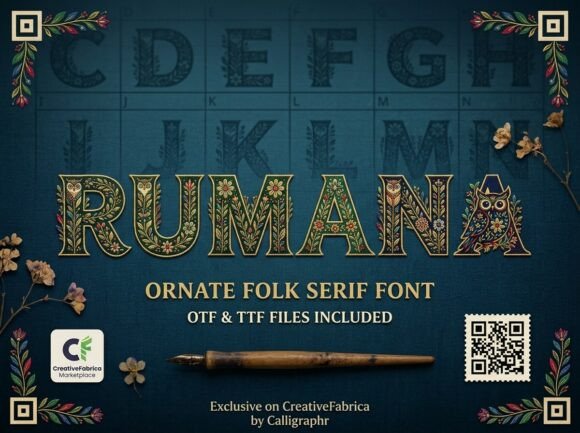
If you've spent any time scrolling through design blogs or mood boards lately, you've likely noticed a resurgence of intricate, handcrafted aesthetics. It’s a pushback against the sterile minimalism of the last decade, and fonts like Rumana are leading the charge. This isn't just a typeface; it's a piece of storytelling. Rumana is an ornate folk serif font, a premium design asset that feels less like digital text and more like a carefully embroidered tapestry. Each letterform is a dense composition of floral motifs, whimsical owls, and a palette of rich green, gold, and crimson, capturing the spirit of traditional craftsmanship in a digital format.
A Typeface That Tells a Story
What makes Rumana immediately stand out is its personality. It’s a display font in the truest sense—meant to be seen, admired, and to set a specific mood. The visual style is unmistakably rooted in folk art and classic embroidery patterns. Imagine the intricate details of a vintage sampler or the bold, decorative borders of a storybook from a bygone era. That’s the world Rumana inhabits.
The appeal lies in its authenticity. In a landscape crowded with clean sans serif fonts and predictable script fonts, Rumana offers a distinct character. The dense floral and animal details aren't just decoration; they evoke a sense of history, warmth, and narrative. This makes it an exceptional choice for projects that need to convey tradition, whimsy, or a touch of magic. It’s a typeface that doesn’t just say words—it paints a picture.
Where Rumana Truly Shines: Practical Applications
Understanding a font's personality is one thing, but knowing where to deploy it is where the real value lies for designers, entrepreneurs, and creators. Rumana isn't your body copy font; it’s your headline hero. Its strength is in its impact, making it ideal for specific, high-visibility applications.
- Cultural and Heritage Branding: For brands built around artisanal goods, local history, or folk traditions, Rumana is a natural fit. Think logos for craft breweries, bakeries specializing in heritage recipes, or boutique hotels in historic districts. It instantly communicates a story of quality and tradition.
- Publishing and Editorial Design: This is where Rumana truly feels at home. It’s a perfect choice for the title of a fairy-tale collection, a fantasy novel, or a children's book about folklore. Used for chapter headings or drop caps in a magazine feature on travel or crafts, it adds a layer of depth and visual intrigue that modern typography often lacks.
- Premium Packaging and Labels: For products that aim for a premium, handcrafted feel, Rumana can elevate the entire design. Consider it for artisanal coffee bags, small-batch jam jars, or holiday gift packaging. Its rich color palette and intricate details suggest a product made with care and attention.
- Event and Stationery Design: Wedding invitations for a rustic or garden-themed celebration, posters for a local folk festival, or menus for a cozy restaurant can all benefit from Rumana's unique charm. It sets a specific, memorable tone before a guest even arrives.
- Digital and Social Media Graphics: While it requires careful use online, Rumana can be a powerful tool for social media. A logo lockup, a headline for a blog post about traditional crafts, or a featured image for an Etsy seller can use Rumana to stop the scroll and establish a unique brand identity that stands out from the generic templates.
The Strategic Impact of a Creative Font
Choosing a font like Rumana is a strategic decision that influences how an audience perceives a brand or project. It’s not just about aesthetics; it’s about communication. The right typeface can shape brand perception, build recognition, and drive engagement.
When you use a font with this much inherent character, you’re making a statement about your brand’s values. It suggests creativity, a respect for tradition, and a rejection of the mass-produced. This can be a powerful tool for building a loyal audience that connects with those ideals. However, this strong personality requires balance. A key principle in design is visual hierarchy. Rumana should be used for headlines or logos, paired with a simpler, more neutral body font—a clean sans serif font or a classic serif font—to ensure readability. This contrast allows the display font to do its job without overwhelming the viewer.
Consistency is also crucial. Using Rumana across key brand touchpoints—from your website’s main heading to your product labels and social media profile picture—helps build a cohesive and professional brand identity. It becomes a recognizable signature that audiences learn to associate with your quality and style.
A Practical Guide to Working with Rumana
Ready to incorporate Rumana into your next project? Here’s some practical guidance to ensure it works for you, not against you.
- Evaluate Project Fit: Before you even download, ask yourself: does this project need a bold, decorative voice? Rumana is perfect for evoking a fairy-tale mood, but it would be out of place on a corporate financial report. Match the font’s personality to the project’s core message.
- Test Font Pairings: The success of Rumana often depends on what you pair it with. For a balanced design, pair it with a simple, geometric sans serif font for body text. If you want a more classic feel, a traditional serif font with good readability can also work. Avoid pairing it with other highly stylized script or handwritten fonts, as they will compete for attention.
- Consider Readability: Due to its intricate details, Rumana is best used at larger sizes. At small sizes, the fine motifs can become a muddy blur, especially in print or on low-resolution screens. Always test your designs at the intended output size. For digital use, check its clarity on both desktop and mobile devices.
- Review Licensing and Styles: As a premium font, Rumana will come with a commercial license. Understand the terms—can you use it for client work, merchandise, or digital products? Also, check if it includes multiple styles (like a bold or condensed version) that could offer more flexibility within your design system.
In the end, Rumana is more than just a collection of ornate glyphs. It’s a bridge between the meticulous artistry of the past and the dynamic needs of modern design. For designers, marketers, and creators looking to inject a project with genuine character, storytelling, and a touch of folkloric magic, it’s a design asset that delivers real, tangible value. It’s a reminder that in our digital age, the most powerful tools are often those that feel the most human.